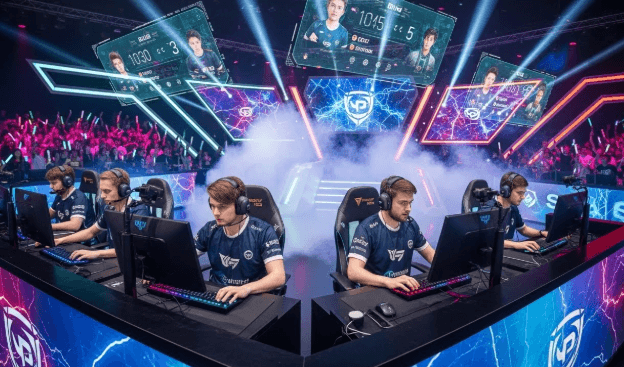
The future of eSports technology integrates AI coaching, real-time analytics, and immersive hardware into performance ecosystems. Data-driven pipelines deliver edge-validated dashboards and rapid feedback loops for players and coaches. Edge computing, 5G, and cloud-native leagues reduce latency while expanding cross-platform reach. Open tooling and global matchmaking unify competition with resilient telemetry guiding skill acquisition. The implications for training, competition, and monetization are profound, yet practical integration challenges remain to be solved.
How AI Coaching Will Shape Player Development
AI coaching stands to transform player development by systematically augmenting decision-making, mechanical consistency, and strategic understanding through real-time analytics and individualized feedback.
The approach yields measurable gains in player mindset and adaptability, enabling disciplined practice and targeted growth.
Scheduling optimization aligns micro-rituals with peak performance windows, reducing burnout while preserving autonomy, flow, and long-term skill acquisition in dynamic competitive environments.
Real-Time Analytics and Performance Visualization
Data latency is minimized through streaming pipelines, standardized schemas, and edge-validated aggregates, enabling analysts to compare strategies.
Player dashboards offer transparent, scalable feedback loops, guiding training, innovation, and adaptive, freedom-forward competition.
Immersive Hardware, Edge Computing, and 5G in the Arena
Immersive hardware, edge computing, and 5G converge to redefine latency, reliability, and sensory fidelity in esports arenas.
The data narrative emphasizes low-latency streams, localized processing, and adaptive bandwidth allocation, enabling high-fidelity haptics and real-time crowd metrics.
In practice, immersive hardware enables portable, scalable rigs; edge computing reduces round-trip delays; 5g in the arena sustains resilient, immersive experiences for diverse participants.
Two-word discussion ideas: latency resilience; spectrum optimization
Cloud-N-based Leagues and Global, Cross-Platform Play
Cloud-N-based leagues leverage centralized, scalable infrastructure to unify cross-platform play across diverse hardware ecosystems. This model quantifies latency optimization gains, enabling predictable performance regardless of client hardware.
Global matchmaking evolves through standardized protocols and edge-serving queues, reducing variance and enabling fair competition. Data-driven telemetry guides iterative platform improvements, while developers pursue open, interoperable tooling to support cross platform matchmaking and broad audience freedom.
See also: The Future of Email Communication
Frequently Asked Questions
What Are the Ethical Implications of AI in eSports Coaching?
AI in esports coaching raises ethics enforcement concerns and demands AI transparency; pro teams seek verifiable audit trails, bias mitigation, and accountable decision-making, while players demand autonomy. Data-driven frameworks project compliance, fairness, and responsible performance enhancement for a freedom-loving audience.
How Will Data Privacy Be Managed With Real-Time Analytics?
Data privacy will be maintained through encryption, access controls, and audit trails in real time analytics pipelines, ensuring compliant data governance while enabling secure, transparent insights for autonomous systems and performance optimization in evolving esports contexts.
Can Edge Computing Reduce Latency for Mobile Spectators?
Edge computing can reduce latency for mobile spectators, optimizing edge latency through localized processing and CDN integration. This data-driven approach enables scalable, low-latency streams, empowering mobile spectators with smoother, near-imperceptible delays and greater viewing freedom.
How Will Cross-Platform Balance Account for Hardware Disparities?
Cross-platform balancing accounts for hardware disparities by normalizing inputs, frame rates, and rendering paths, reducing skew. Balancing hardware is pursued through adaptive pipelines and unified APIs, aiming for predictable cross platform latency across diverse devices and networks, with freedom to innovate.
What Career Paths Exist Beyond Professional Play in eSports Tech?
Career paths exist beyond professional play in esports tech, encompassing data privacy, systems engineering, tool development, performance analytics, and platform security. Data-driven, forward-looking roles enable researchers, developers, and operators to shape scalable, freedom-oriented esports ecosystems through rigorous collaboration.
Conclusion
Across the ecosystem, analytics-driven coaching and edge-enabled visualization converge into a precise, scalable nervous system for esports. Real-time telemetry, AI-guided micro-rituals, and cross-platform leagues stitch a data fabric that adapts faster than human reaction alone. As latency shrinks and hardware fidelity rises, performance trajectories become programmable futures, not accidents. The arena evolves into a cloud-native, autonomous skill factory—where every frame is measured, every decision modeled, and teams sprint toward an ever-optimizing horizon.